
Vietnamese art is a vibrant and diverse expression of the country’s rich cultural heritage and the creative prowess of its artists. From its early beginnings to the contemporary art scene, Vietnamese artists have continually evolved, adapting to social, political, and economic changes. This article explores the fascinating journey of Vietnamese art, highlighting its significant periods and influential artists.
Exploring Artistic Challenges and Developments: The Pre-Renovation Period (1975-85)
The period following Vietnam’s national unity in 1975 marked a time of interaction and fusion between the artistic traditions of the North and South regions. Artists from both regions influenced each other, with Southern art embracing the socialist realism of the North, while Northern art embraced the modern styles prevalent in the South and beyond. This mutual influence laid the groundwork for the subsequent art movement known as renovation art.
However, during the pre-renovation period, Vietnamese art faced various challenges. The aftermath of a prolonged war, limited resources, and a developing post-war economy impacted the professionalism of artists. Many struggled with inadequate painting materials and lacked the necessary conditions to fully dedicate themselves to their craft. As a result, artistic endeavors were often approached with amateurism, leading some artists to become classified as artisans.
Notwithstanding the limitations, this period saw periodic government-sponsored art exhibitions where themes such as building socialism, worker and peasant soldiers, and the revolutionary war prevailed. While rooted in simplicity and comprehensibility, some artworks demonstrated influences from renowned Western artists such as Fernand Leger, Picasso, and Matisse, showcasing elements of cubism, surrealism, graphics, and naivety.
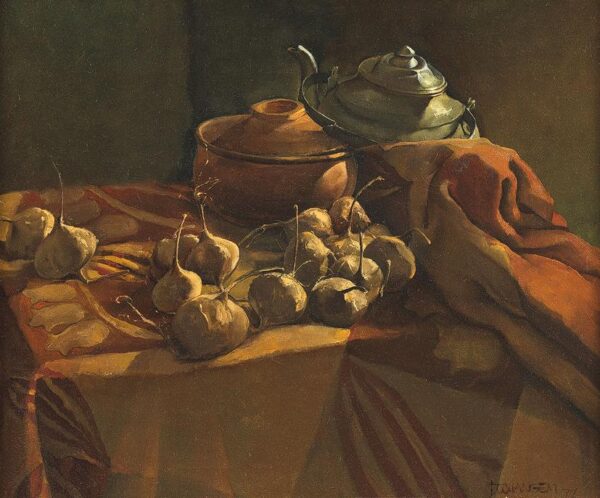
Among the artists who left a lasting impression during this period were Quang Tho, Dang Thi Khue, Le Anh Van, Le Huy Tie, Do Quang Em, Nguyen Trung, Bu Chi, Hang Dang Nhuan, Kim Bach, Kim Thai, Hang Tram, Co Chu Pin, Lo An Quang, Dang Thu Hung, Do Son, and Do Thi Ninh in painting; Vu Duy Nghia, Duong Ngoc Canh, Phung Pham, Mai Khan, and Tran Nguyen Dan in graphics; and Le Cong Thanh, Dinh Ru, Ta Quang Bao, Phan Gia Hung, and Hua Tu Hoa in sculpture.
Renovation Art: Unleashing Creativity and Embracing Change (1986-2000)
The period of renovation art in Vietnamese art history coincided with the government’s open-door policy, leading to significant socio-economic and political changes. Subsidization was eliminated, privatization increased, and democratic and international relations were fostered. These shifts created new opportunities and conditions for artistic development, allowing artists to freely explore individual expression through their work.
Renovation art witnessed a remarkable growth in Vietnamese art, with artists organizing individual and group exhibitions independently, free from government influence. Some artists even began selling their paintings, making a living solely from their artistic pursuits. Vietnamese art gained recognition and established its standing and reputation in the regional and global art scenes.
This period witnessed a diverse range of artistic trends and individual styles. Three significant steps marked the evolution of Vietnamese art during this time:
- Revisiting and drawing inspiration from village culture, pre-colonization traditions, and developing a neo-primitive and realistic inclination.
- Modernizing the plastic language through abstractionism, expressionism, cubism, and surrealism, liberating artists from previous artistic restrictions and embracing Western influences.
- Embracing new forms