During the period of the Indochina College of Fine Arts, a remarkable cohort of contemporary Vietnamese artists emerged. This pioneering institution, established in the transformative years of the 1920s, provided a platform for artistic education and experimentation. It became a catalyst for the birth of modern Vietnamese art, marking a significant departure from the traditional artistic practices prevalent in the region.
At the core of this artistic transformation was the exposure of Vietnamese artists to Western art, which offered a rational and scientific approach. This departure from the traditional Vietnamese art style, characterized by its popular decorative elements and relative viewpoints, presented a new aesthetic perspective. It challenged the artists to explore alternative artistic techniques and to reconsider their artistic expression.
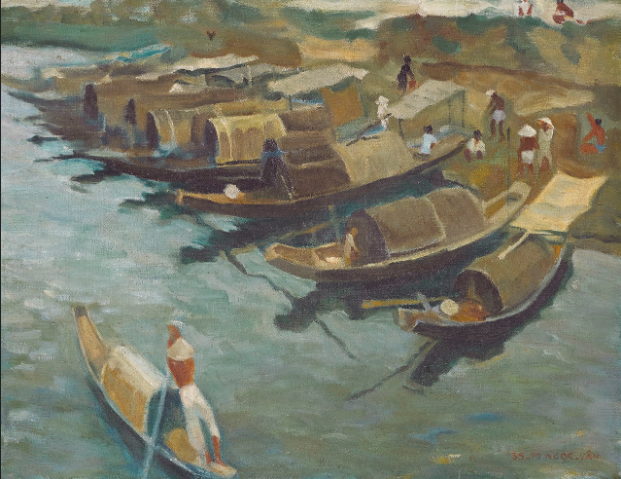
Among the notable artists who emerged during this period were Nguyen Gia Tri, To Ngoc Van, Tran Van Can, Le Pho, Mai Trung Thu, Vu Cao Dam, Nguyen Tien Chung, and Le Thi Lu. These artists demonstrated a remarkable ability to adapt to the new techniques and approaches introduced by the Indochina College of Fine Arts. They embraced Western artistic influences while incorporating their unique perspectives and cultural backgrounds.
Exploring Traditional Mediums: Lacquer and Silk in the Hands of First-Generation Artists
The prevailing artistic style during this era came to be known as the Indochina artistic style. This style emerged as a blend of classical realism and impressionistic calligraphy under the guidance of prominent French artists, including Victor Tardieu and Inguimberty. It provided a framework for the exploration of new artistic possibilities and the fusion of Eastern and Western artistic sensibilities.
However, the adoption of Western artistic approaches was not without its challenges for the Vietnamese artists. The rational and scientific aesthetics of Western art were, in some ways, foreign and imposing to the artists, who had deep-rooted connections to their traditional and Eastern artistic heritage. As a result, some painters sought to reconnect with their cultural roots and Eastern aesthetics by incorporating elements from Chinese art and Japanese woodblock paintings into their works. This fusion of influences led to the creation of a distinct artistic voice that resonated with the Vietnamese cultural identity.
Furthermore, the first-generation artists ventured into the exploration of traditional Vietnamese mediums, such as lacquer and silk. They delved into the intricacies of these materials, pushing the boundaries of artistic expression. Nguyen Gia Tri, in particular, became renowned for his luxurious and enigmatic lacquer paintings, which showcased a sophisticated use of colors and textures. Meanwhile, Nguyen Phan Chanh pioneered a unique style in silk paintings, infusing them with a sense of national identity and cultural symbolism.
The artistic achievements of these early contemporary Vietnamese artists shaped the trajectory of modern Vietnamese art and contributed to the formation of a vibrant and unique art movement in Vietnam. Their ability to synthesize diverse influences, merging traditional Vietnamese aesthetics with innovative approaches and incorporating global artistic trends, resulted in a rich tapestry of artistic expressions. These expressions embodied the vibrant spirit and complex identity of Vietnam, inviting viewers to contemplate the intricacies of Vietnamese society, its rich history, and its ever-evolving cultural landscape.
In essence, the Indochina College of Fine Arts served as a crucial bridge that linked the emerging Vietnamese art scene with the established canons of international aesthetics. It provided a nurturing environment for contemporary Vietnamese artists to thrive and experiment, fueling their creative journeys and setting the stage for the remarkable evolution of modern Vietnamese art.